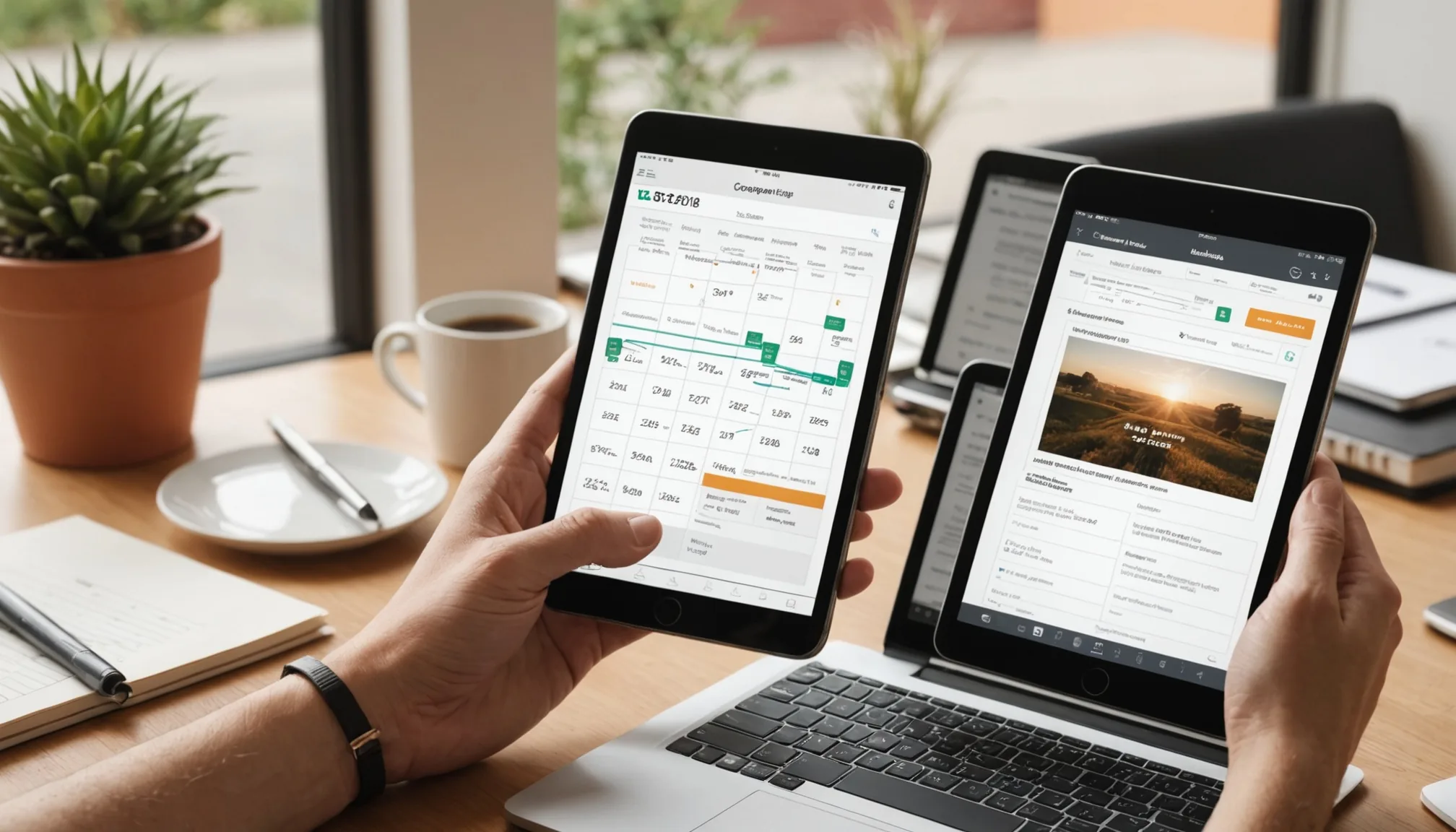

Revenue Opportunity Analysis for Vacation Rental Calendars
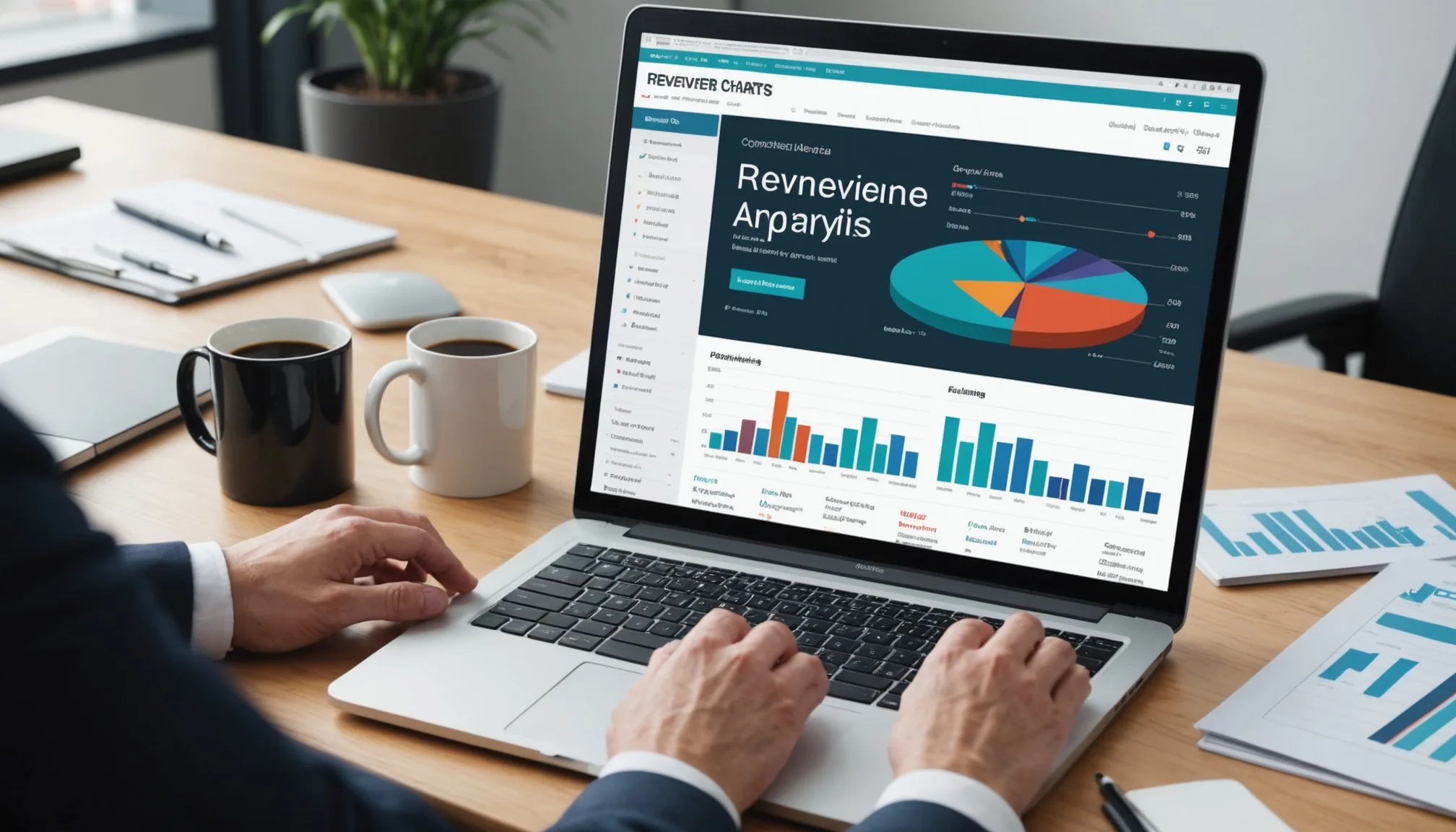
Most STR operators know their occupancy rate. Fewer know how much revenue they left on the table last month. That gap, the difference between what you earned and what your calendar could have earned, is what a revenue opportunity analysis actually measures. In our tracking of independent operator portfolios, that gap averages 18 to 22 percent of gross annual booking revenue. That is not a rounding error.
What a Revenue Opportunity Analysis Actually Measures
A revenue opportunity analysis compares your realized nightly rates against a modeled optimal rate for each date on your calendar. The optimal rate is not a wish number. It is built from three inputs: competitor rates for comparable listings on those same nights, demand signals like local events and holiday patterns, and your listing's own historical booking-window behavior.
The output is a date-by-date table showing where you priced correctly, where you priced below market and still filled (missed revenue), where you priced below market and did not fill (missed revenue and missed occupancy), and where you held firm and the date stayed vacant despite a market softening around you (pricing error in the other direction).
Here's the thing: operators who have never run this analysis are usually surprised by two things. First, the sheer number of dates in the second category, priced below market and still filled, which reads on their dashboard as a win but is actually a quiet loss. Second, how often both types of errors cluster around the same dates every year. Shoulder-season weekends in March and October are the worst offenders on most Florida and Tennessee portfolios we have seen.
Reading Your Calendar Like a Revenue Map
Break your trailing 12-month calendar into four buckets.
- Peak booked: Dates that filled at or above the modeled rate. These are your benchmark nights.
- Below-rate booked: Dates that filled but at a rate more than 10 percent below the market median for comparable listings. Every night here is a measurable dollar amount you did not collect.
- Vacant near-market: Dates that stayed empty when your rate was within 15 percent of the comparable median. These signal either positioning problems or booking-window misalignment, not a pricing problem per se.
- Vacant mispriced: Dates where your listing was priced more than 20 percent above the comparable median and stayed empty. These are the clearest pricing errors.
In our experience, below-rate booked nights and vacant mispriced nights together account for 80 percent of the revenue gap on most portfolios. The other two buckets are noise.
The Booking-Window Factor Most Operators Miss
Calendar analysis gets more useful when you layer in booking-window data. A date that filled 45 days out is a different signal than a date that filled 3 days out, even if the nightly rate looks the same on your dashboard.
If your listing consistently books within the last 10 days before a stay, and your current pricing strategy treats every date the same regardless of lead time, you are leaving money on the table two ways. First, you are not capturing the last-minute price premium that low-inventory markets support. Second, you are potentially holding out on a high rate for a date that your listing's actual audience will only book at a discount when the stay is imminent.
Our data shows that listings with a median booking window under 12 days can recover 8 to 14 percent additional revenue by applying a progressive last-minute discount curve that starts 14 days out and floors at 20 percent below the original rate by day 3. That is not giving away the stay. It is pricing to your listing's actual demand pattern instead of against it.
Practical note: Your booking-window distribution is not stable year-round. It typically compresses during peak season (guests book earlier for high-demand weekends) and stretches during shoulder seasons (guests wait for discounts). A single booking-window profile applied to all 365 days will be wrong most of the time.
High-Demand Dates You Are Probably Missing
Local event calendars are the most underused input in STR pricing. A major convention, a college graduation weekend, a sports playoff, or an outdoor music festival within a 15-mile radius can push nightly rates for comparable listings 40 to 90 percent above baseline. Operators who are not monitoring event calendars find out about these demand spikes after the fact, usually when they notice a competitor listing jumped to a rate they did not match.
Real talk: missing one major event weekend per quarter in a market like Miami, Nashville, or Austin is equivalent to a full week of baseline revenue gone. That is not a small adjustment. It is the kind of miss that adds up to $4,000 to $8,000 per year on a single mid-range listing, and multiples of that across a portfolio of 20 or more.
The fix is straightforward. Build a 90-day forward event calendar for each listing's market and flag any date where a confirmed event is expected to draw 5,000 or more attendees within your radius. Those dates get manual review before your pricing model sets them automatically. Adjust your ceiling upward. Lock it in before the booking window opens.
Turning the Analysis Into a Weekly Habit
A revenue opportunity analysis is not a one-time audit. It is most useful as a weekly discipline applied to the trailing 7 days and the forward 30 days simultaneously.
Looking back over the prior week, flag any below-rate booked nights and calculate the gap in dollars. Five nights at $30 below the comparable median is $150. Across a 30-listing portfolio, that compounds quickly. Looking forward over the next 30 nights, flag any dates where your current rate is more than 20 percent below the comparable median and the date is not yet booked. Those are your live opportunity gaps. Act on them before the booking window closes.
This forward-looking scan is where most operators get the highest return on time. Honestly, 20 minutes per week on forward calendar review does more for annual revenue than hours of historical reporting. History tells you what you lost. The forward scan gives you a chance to recover.
| Analysis Type | Frequency | Action Output |
|---|---|---|
| Trailing 7-day gap review | Weekly | Recalibrate base rate for next comparable period |
| Forward 30-day opportunity scan | Weekly | Adjust rates on underpriced open dates |
| Booking-window profile review | Quarterly | Update lead-time discount curve per listing |
| Event calendar overlay | Monthly | Manual rate lock on high-demand flagged dates |
| Full annual opportunity audit | Annually | Benchmark realized vs. modeled revenue by listing |
What the Numbers Look Like in Practice
On a portfolio of 22 listings in the Florida Keys, running a structured revenue opportunity analysis for the first 90 days surfaced $31,400 in below-rate booked nights and $8,600 in missed bookings on dates where the listing had been priced above the comparable median during a soft demand week. That is $40,000 in a single quarter from a portfolio that looked healthy on surface occupancy metrics.
Period. Occupancy is not revenue. A 90 percent occupied calendar at below-market rates is worse than an 82 percent occupied calendar at correct market rates on most listings. The analysis makes that visible.
The methodology scales down to a single listing. Even a one-property operator who runs a quarterly review of below-rate booked nights will find patterns worth acting on. The tools required are basic: a spreadsheet, a 30-day rate sample from comparable Airbnb and Vrbo listings, and your booking history export. That is enough to get started.
Conclusion
Revenue opportunity analysis is not a complex concept. It is a disciplined comparison between what your calendar earned and what it could have earned, done consistently enough that you stop repeating the same pricing mistakes year over year. The data is available. The patterns are recognizable. The only variable is whether you are looking.
If you want to see how Strpricely surfaces these gaps automatically, from the trailing revenue digest to the forward 30-day opportunity scan, get in touch and we will walk through your calendar together.